Project Overview
Multilingual Futures explores how arts-based, collaborative workshops can support students and teachers in English-medium schools in India to recognize, affirm, and mobilize their diverse linguistic repertoires, particularly marginalized tribal and Indigenous languages.
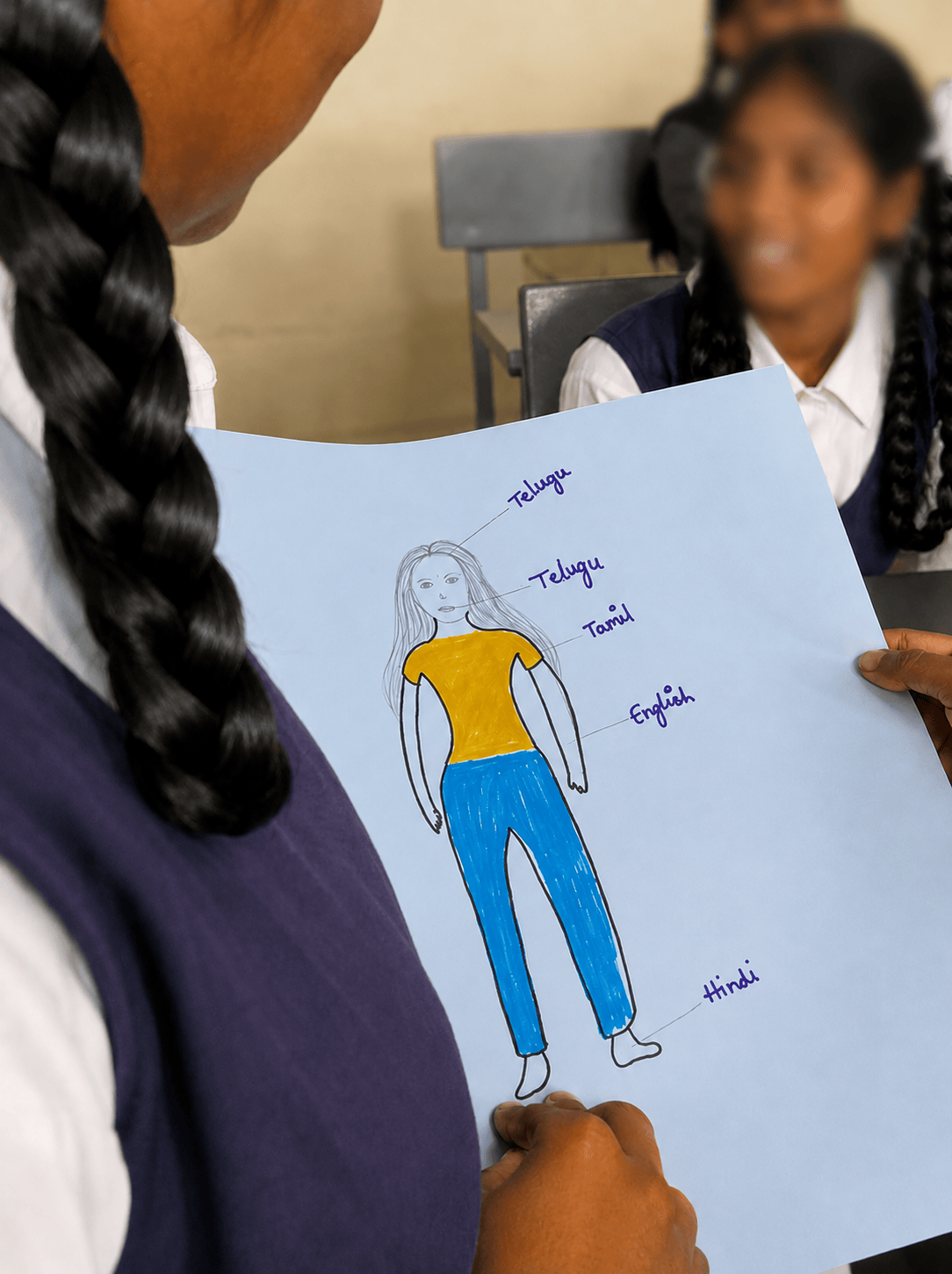
Situated within an educational landscape where English and other dominant languages can marginalize students’ home languages, the project uses visual art, storytelling, poetry, performance, and other multimodal practices to make students’ linguistic identities visible. It brings students, teachers, parents, and communities into dialogue about multilingualism and seeks to move it from an incidental classroom practice toward more intentional, critical pedagogy.
At its core, the project positions students not simply as language learners, but as linguistic and cultural agents capable of challenging language hierarchies and imagining more inclusive multilingual classrooms.
Project at a Glance
July -December 2025
Role
Principal Investigator
Location
India
Participants
Linguistically Minoritized Students
Research Approach
Workshop-based, multilingual, multimodal, and dialogic inquiry
Research Focus
Critical Multilingualism · Linguistic Justice · Arts-Based Pedagogy · EMI · Indigenous and Tribal Languages

I am thankful to Prof. Lina Mukhopadhyay, The English and Foreign Languages University (EFLU), Hyderabad, for her invaluable support as the local collaborator on this project.

I gratefully acknowledge Dr. Priya Prithiviraj, International Institute of Information Technology Hyderabad (IIITH), and Ms. Greena Joseph, Mahindra University, Hyderabad, for their valuable assistance with fieldwork and data collection for this project.
Research Questions
01
How do arts-based workshops influence students’ awareness and articulation of their linguistic identities and practices?
02
How does collaborative arts-based intervention influence the adoption of critical translanguaging practices in English-dominant classrooms?
Research in Action
The project uses arts-based workshops as spaces for participation, reflection, and transformation. Students, teachers, parents, and community members engage at different stages, moving from the exploration of linguistic identities toward collective reflection and linguistic activism.
CREATE
Multilingual Artifacts
Students create visual art, poetry, digital stories, performances, and other multilingual and multimodal works representing their linguistic identities and lived experiences.
REFLECT
Teacher Dialogues
Teachers engage with students’ creations and participate in facilitated reflection on multilingualism, language hierarchies, and possibilities for more inclusive classroom practices.
ACT
Linguistic Activism
Students co-create posters, zines, short films, and other materials advocating for greater recognition of their languages and perspectives within schooling.


Project Gallery