New Hierarchies, New Middle Class
A Critical Ethnography of English-Medium Instruction Policy in Nepal’s Public Schools
Doctoral Research Project | University of British Columbia
Funding: Killam Doctoral Scholarship, The Killam Trusts, Canada (2018-2022)
Award: CAD $60,000
Role: Principal Researcher


Project Overview
English-medium instruction (EMI) has expanded rapidly across public schools in Nepal, driven by widespread aspirations for English, educational quality, and socioeconomic mobility. Yet the growing prominence of English raises important questions about who benefits from EMI and how its expansion affects students from different linguistic, ethnic, gender, and socioeconomic backgrounds.
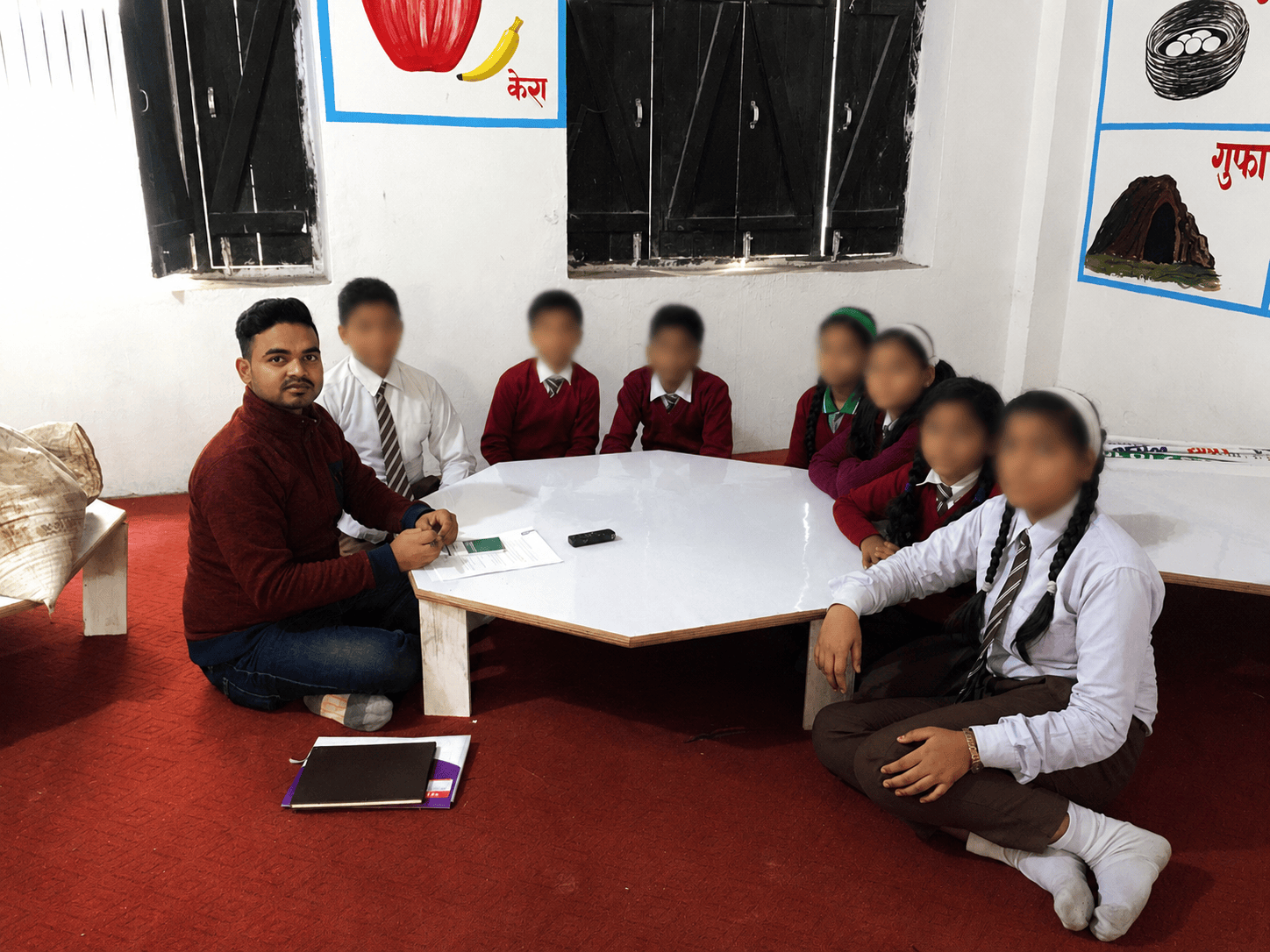
This doctoral project examined the political economy of EMI in Nepal’s multilingual public education system, asking how English-medium policies are produced, interpreted, and enacted across different layers of educational governance. Rather than treating EMI simply as a pedagogical or language choice, the research investigated its connections to privatization, class aspiration, language hierarchy, and social inequality.
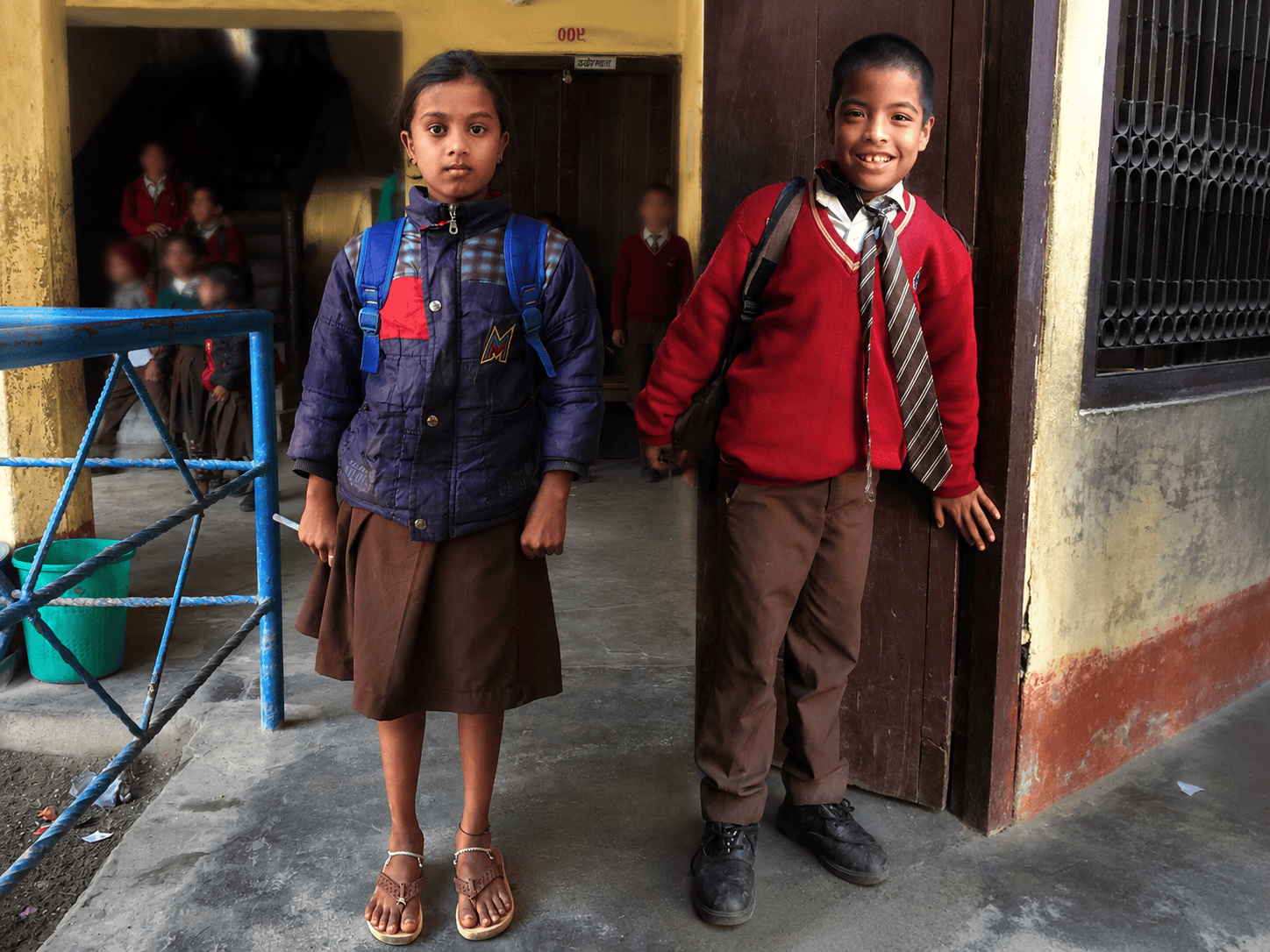
The study paid particular attention to the consequences of EMI for students from minoritized linguistic and ethnic communities and lower socioeconomic backgrounds. It examined how the promise of English as a route to mobility can simultaneously produce new educational and social hierarchies.
Research Questions
The project was guided by an overarching question:
How is EMI policy developed, enacted, resisted, and accounted for by policymakers, school administrators, teachers, parents, and students in Nepal’s public schools?
More specifically, the research examined:
How national and subnational policymakers envisioned and planned EMI alongside mother-tongue-based multilingual education;
How policy was interpreted across national, provincial, municipal, school, and classroom levels;
How school administrators and teachers enacted EMI in practice; and
How parents and students understood and experienced English-medium education.
Key Findings
The research showed that the expansion of EMI in Nepal’s public schools cannot be understood simply as growing demand for English.
EMI and privatization. EMI emerged partly through broader neoliberal transformations of education. Public schools increasingly adopted English to compete with private schools, contributing to forms of privatization within public education.
English and middle-class aspiration. Parents and students often imagined EMI as a pathway toward English proficiency, socioeconomic mobility, and a new middle-class identity. These aspirations became an important ideological force sustaining EMI.
One school, unequal systems. Where English- and Nepali-medium streams operated within the same public school, differences in access and resources contributed to the reproduction of social-class and linguistic hierarchies.
Epistemic inequality. Implementing EMI without adequate teacher preparation and English proficiency could undermine students’ access to subject knowledge rather than automatically improve educational quality.
Unequal multilingualism. Teachers frequently used Nepali to scaffold English-medium lessons. However, students’ mother tongues remained largely absent, meaning that ostensibly multilingual classroom practices could themselves reproduce linguistic inequality.
Why This Research Matters
The project challenges the widespread assumption that expanding English-medium education automatically democratizes access to English and socioeconomic mobility.
Instead, it demonstrates that the language of instruction is inseparable from questions of power, class, ethnicity, language, and educational justice. Policies intended to provide greater access to English can reproduce existing inequalities when schools, teachers, and students do not have equitable access to the resources required to make EMI work.
The study therefore cautions against rapid transitions toward English-medium schooling in multilingual, low- and middle-income contexts and argues for language-in-education policies that take seriously educational quality, multilingualism, linguistic rights, and social equity.
Publications
Doctoral Dissertation
Sah, P. K. (2022). New Hierarchies, New Middle Class: A Critical Ethnography of English as a Medium of Instruction Policy in Nepal’s Public Schools. PhD dissertation, University of British Columbia.
Articles & Book Chapters
Sah, P. K. (2025). The politics of distraction in planning English-medium education policy in schools. Current Issues in Language Planning, 26(3), 308-329. https://doi.org/10.1080/14664208.2024.2358278
Sah, P. K. (2025). School administrators’ agency in planning language of instruction: But for whom? In S. A. Manan & A. Hajar (eds.), Agency in multilingual education policy and planning in Asia (pp 119-134). Routledge. https://doi.org/10.4324/9781003513599-7
Sah, P. K., & Li, G. (2024). Toward linguistic justice and inclusion for multilingual learners: Implications of selective translanguaging in content-based English-medium instruction classrooms. Learning and Instruction, 92, Article 101904. https://doi.org/10.1016/j.learninstruc.2024.101904
Phyak. P., & Sah, P. K. (2024). Epistemic injustice and neoliberal imaginations in English as a medium of instruction (EMI) policy. Applied Linguistics Review, 15(4), 1321-1343. https://doi.org/10.1515/applirev-2022-0070
Sah, P. K. (2024). Language, schooling, and inequalities for ethnic minority children: An ethnography of medium of instruction policy in Nepal’s public school. In R. A. Giri, A. Padwar and M. M. N. Kabir (eds.), Equity, social justice, and English medium of instruction: Case studies from Asia (pp. 96-106). Springer. https://doi.org/10.1007/978-981-97-8321-2_5
Sah, P. K., & Li, G. (2024). School as the agency of social reproduction: A case of medium of instruction policymaking for quasi-privatization in Nepal. In Downes, P., Li, G., Van Praag, L., & Lamb, S. (eds.), The Routledge international handbook of equity and inclusion in education (pp 219-231). Routledge
Sah, P. K. (2023). Emotions as entanglements: Unpacking teachers’ emotion management and policy negotiation in English-medium instruction programmes. The Language Learning Journal, 51(5), 607–620. https://doi.org/10.1080/09571736.2023.2243954.
Sah, P. K., & Li, G. (2022). Translanguaging or unequal languaging? Unfolding the plurilingual discourse of English medium instruction policy in Nepal’s public schools. International Journal of Bilingual Education and Bilingualism, 25(6), 2075-2094. https://doi.org/10.1080/13670050.2020.1849011
Read More Related Publications Here →
Project Gallery